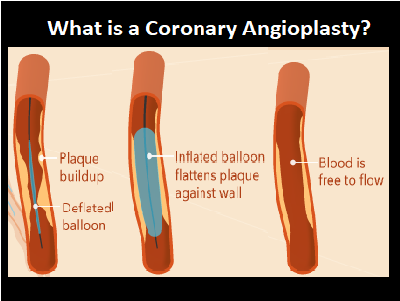
What is Coronary Angioplasty?
The term Angioplasty means using a balloon
to stretch open a narrowed or blocked artery. However, most modern angioplasty
procedures also involve inserting a short wire-mesh tube, called a stent, into
the artery during the procedure. The stent is left in place permanently to allow
blood to flow more freely.
Coronary
Angioplasty is
sometimes known as percutaneous transluminal coronary angioplasty (PTCA). The
combination of coronary angioplasty with stenting is usually referred to as
percutaneous coronary intervention (PCI). A catheter is a thin, flexible tube
which is inserted into a coronary artery. The balloon at the tip of the
catheter is blown up at the narrowed section of artery to force it wider. A
small tube (a stent) is left in place to keep the artery widened.
What are the benefits of a coronary angioplasty?
In most cases, the blood flow through the coronary arteries improves after an angioplasty. Many people find that any symptoms they had significantly better and they’re able to do more than they could before the procedure.If you’ve had a heart attack, an angioplasty can increase your chances surviving more than clot-busting medication (thrombolysis) can and the procedure can also reduce your chances of having another heart attack in the future.
 Dr. Rahul Patil