Categories
Health and Care

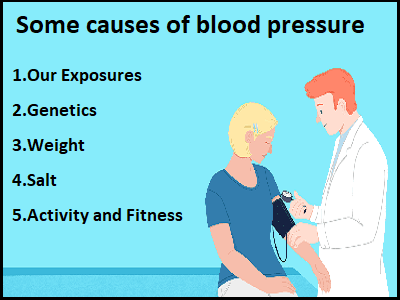
Some Causes of High Blood Pressure

Dr. Rahul Patil - Best cardiologist in Pune

1.Our Exposures

When we admit what causes high blood pressure, a variety of environmental exposures return to mind and are well-established influences of blood pressure. Diet is acknowledged to try to do this with sodium consumption the foremost acknowledge cause additionally as a diet low in fiber or vegetables. Excess alcohol has been concerned.

Poor way normally can low levels of activity and being overweight are necessary factors. a mixture of those factors is felt to hold the bulk of high blood pressure and for this reason non-drug, primarily based interventions are essential once treating high blood pressure. we are going to discuss several of those factors of what causes high blood pressure below

2. Genetics

Most consultants agree that there’s probably a major underlying genetic part to high blood pressure, the foremost common style of high blood pressure, but the reality is that once it involves the general public with high blood pressure, we tend to haven’t quite worked  out the genetic basis of what makes high vital sign that is without doubt advanced. This remains the extreme focus of in-progress research. There are however well defined genetic variants that are effective for small subsets of hypertensive patients. In these few subsets such as Liddle’s syndrome and others, changes in single genes reveals what makes high blood pressure.

4.Weight

The relationship between one’s body weight and blood pressure has been well established. Overweight people, for example, are much more likely to have high blood pressure.

This has been shown in many studies. In case of these considerations, the extra overweight one is, the higher their blood pressure is expected to be. In fact, if overweight patients drop weight and respond to a healthy weight, they have a significantly decreased risk of becoming hypertensive.

5.Salt

Interestingly not only high sodium levels but also low potassium levels have been involved in high blood pressure. In any dispute, the use of sodium while creating high blood pressure has been uncertain, but the medical center as a full guarantees mind when it happens to sodium consumption.

This is, even more, the situation in those supposed to be salt-sensitive such as the old and black patients or those with diabetes and kidney disease. It is a different case for potassium. Moderate potassium is linked to higher blood pressure and also more serious issues. A higher potassium level may blunt the impact of sodium on blood pressure.

6.Activity and Fitness

The relationship between physical activity and vital signs is well established. A lot of active someone is that the less possible they’re to own high blood pressure. this can be not simply the case for athletes since even comparatively modest levels of activity square measure related to lower levels of vital sign. Higher levels of fitness might forestall high blood pressure, improve vital sign management and result in improved vas outcomes generally.
Categories
Health and Care

Eat Healthy Live Long Healthy Life.

Enough solid evidence now exists to offer women several fundamental strategies for healthy eating. This includes emphasizing healthful unsaturated fats, whole grains, good protein, fruits and vegetables; limiting consumption of trans and saturated fats, highly refined grains, and sugary beverages; and taking a multivitamin with folic acid and extra vitamin D as a nutritional safety net. A diet based on these principles is healthy through virtually all life stages, from young adulthood through planning for pregnancy, pregnancy, and on into old age.

What is a healthy diet? We have many books and literature for healthy and balanced diet so as to prevent ourself from diseases and to live a long healthy life. Diet, of course, is just one approach to preventing illness. Limiting caloric intake to maintain a healthy weight, exercising regularly, and not smoking are three other essential strategies.

Avoid trans fats, which are generally found in commercially baked products and deep-fried restaurant food.

Limit intake of sources of rapidly digested carbohydrates such as white flour, white rice, pastries, sugary drinks, and French fries. In their place, emphasize whole grains (such as brown rice, barley, bulgur, quinoa, and wheat berries), whole fruits and vegetables, beans, and nuts.

Water is the best choice for hydration. Coffee and tea in moderation (with only a small amount of milk or sugar) are generally safe and healthful beverages. If milk is part of the diet, skim or low-fat milk is best. Avoid sugar-laden drinks such as sodas, fruits drinks, and sports drinks.

Calories expended are as important for good health as the quality and quantity of calories consumed. Current recommendations call for 30 minutes of physical activity such as brisk walking on most, if not all, days of the week.

Categories
Health and Care

First Aortic Valve replacement done in awake patient by Young Cardiologist of Pune : Dr Rahul Patil

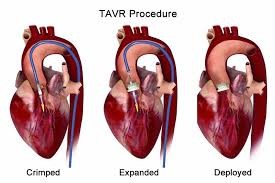
TAVR Procedures

Day 1 Awake Aortic valve replacement under local anesthesia

Dr. Rahul Patil - Best Cardiologist in Pune

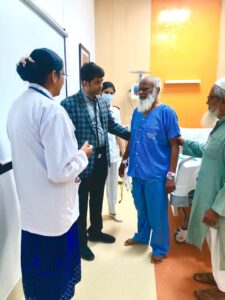
Day 1: After 9 Hours of Valve replacement

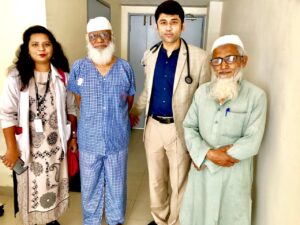
Day 3: Discharge without a single stitch on body

Dr. Rahul Patil - Best Cardiologist in Pune

Transcatheter aortic valve implantation (TAVI) or transcatheter aortic valve replacement (TAVR), is the replacement of the aortic valve of the heart through the blood vessel without open-heart surgery. The replacement valve is delivered by a transfemoral approach ie groin like Angioplasty.

Severe symptomatic aortic stenosis carries a poor prognosis with a life expectancy of 2 to 5 years after diagnosis. Until recently, surgical aortic valve replacement was the standard of care in adults with severe symptomatic aortic stenosis. However, the risks associated with surgical aortic valve replacement are increased in elderly patients and those with concomitant severe systolic heart failure or coronary artery disease, as well as in people with comorbidities such as cerebrovascular and peripheral arterial disease, chronic kidney disease, and chronic respiratory dysfunction.

The first implantation in a patient was performed in 2002 on April 16 by Alain Cribier in Hospital Charles Nicolle, at the University of Rouen

This therapy got USFDA approval in 2011, two major companies which manufacture Valve is Edwards’ Sapien aortic valve is made from bovine pericardial tissue and is implanted via a catheter-based delivery system and Medtronic’s CoreValve Transcatheter Aortic Valve is constructed of a self-expanding Nitinol frame and delivered through the femoral artery. This device received FDA approval in January 2014.

Indian manufactured MyValve is CE approved and Indian DCGI approved from Meril Lifesciences, it started with the Pilot study in India 2017, following which it got DCGI approval, It is available for commercial use since 2018. To date, this  400 numbers of valves are deployed in India and abroad. My valve has received great recognition in Europe and the middle east due to its smooth deliverability and lesser adverse events.

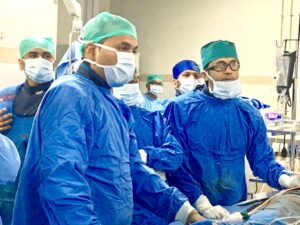
Ruby Hall clinic has delivered such 3 TAVR valves till now, but Young cardiologist Dr. Rahul Patil, Interventional cardiologist, Ruby hall clinic, Pune did this procedure as primary operator along with Proctor Dr. Anmol Sonawane and associate Dr. C N Makhale, Dr. Bikas Sahoo cardiac anesthetist on 13/10/2019 Sunday at 10 am in a 65-year-old Mr. Bashir shaikh from Pune. This procedure was done under local anesthesia in the awake state of the patient during procedure like routine angioplasty. The procedure time was 1 hour only. Dr. P K Grant congratulated the team of Dr. Rahul Patil for his excellent work.

The patient was mobilized after 9 hours, shifted from CCU after 24 hours and discharged on 3 rd day of procedure.

As a conventional Surgical aortic valve replacement, the patient has to undergo open-heart surgery on heart-lung machine where operation time is 4 hours, it involved 10 to 12 % of Morbidity and mortality. Patient has to kept on Ventilator for 24 hours, Patient remains in surgical ICU for 4 days, and total hospitalization for 10 days. It takes  3 weeks for complete healing of stitches over the chest wall, and 2 to 3 months for sternal fracture healing. This procedure also involves the risk of embolic brain stroke in 5 to 6 %of patients.

Today, TAVI is recommended not only in high surgical risk patients but also in moderate to low-risk patients.

Dr. Rahul Patil has been trained in the Netherlands for TAVI in 2009 and now he owes promise to all his high-risk heart valve disease patients who can be treated without undergoing open-heart surgery.

Categories
Health and Care

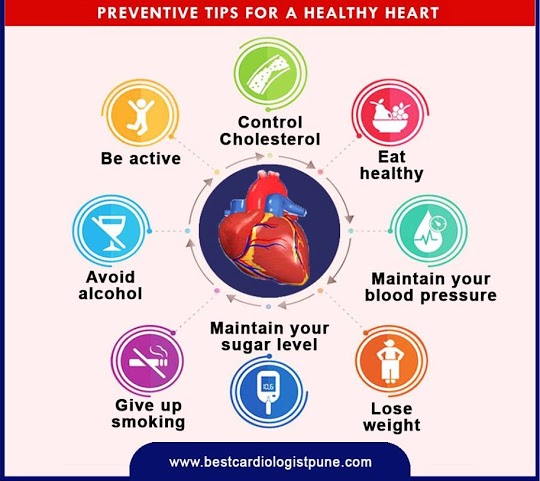
Preventive Tips For a Healthy Heart

  • Cholesterol: Raised levels of cholesterol can close your arteries and increase your risk of coronary artery disease and heart attack .
  • Eat a healthy: Try to restrict full fats, foods high in sodium, and supplemented sugars. Eat lots of fresh fruit, vegetables, and healthy grains.
  • Maintain your blood pressure: Above blood pressure is a significant risk factor for heart disease. It is necessary to make your blood pressure monitored frequently – at most limited once a year for most adults, and more frequently if you have high blood pressure. Appropriate steps, including lifestyle changes, to stop or control high blood pressure.
  • Loose weight: Staying overweight or having obesity can boost your risk for heart disease.
  • Maintain Your Sugar Level: Having diabetes increases your chance of diabetic heart disease. This is because, over time, high blood sugar from diabetes can harm your blood vessels and the tissues that regulate your heart and blood vessels. So, it is necessary to get examined for diabetes, and if you have it, to have it under control.
  • Give Up Smoking: Cigarette smoking increases your blood pressure and sets you at greater danger for heart attack and stroke. If you do not smoke, do not start.
  • Avoid Alcohol: Taking too much alcohol can increase your blood pressure. It also computes extra calories, which may create weight gain
  • Be Active: Exercise has many advantages, including increasing your heart and growing your circulation.
Categories
Uncategorized

Dr. Rahul Patil – Cardiologist in India

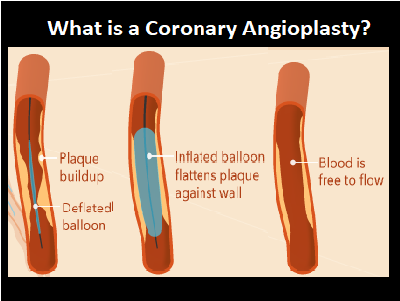
What is Coronary Angioplasty?

The term Angioplasty means using a balloon to stretch open a narrowed or blocked artery. However, most modern angioplasty procedures also involve inserting a short wire-mesh tube, called a stent, into the artery during the procedure. The stent is left in place permanently to allow blood to flow more freely.
Coronary Angioplasty is sometimes known as percutaneous transluminal coronary angioplasty (PTCA). The combination of coronary angioplasty with stenting is usually referred to as percutaneous coronary intervention (PCI). A catheter is a thin, flexible tube which is inserted into a coronary artery. The balloon at the tip of the catheter is blown up at the narrowed section of artery to force it wider. A small tube (a stent) is left in place to keep the artery widened.

What are the benefits of a coronary angioplasty?

In most cases, the blood flow through the coronary arteries improves after an angioplasty. Many people find that any symptoms they had significantly better and they’re able to do more than they could before the procedure.If you’ve had a heart attack, an angioplasty can increase your chances surviving more than clot-busting medication (thrombolysis) can and the procedure can also reduce your chances of having another heart attack in the future.

Categories
Uncategorized

Best Cardiologist in India – Dr. Rahul Patil

Best Cardiologist in Pune, India is a very subjective term, as there are a number of doctors in India specializing in Cardiology across several top hospitals. Dr.Rahul Raosaheb Patil is notably amongst one of the best Cardiologist in Pune as well as in India. He is an expert Interventional Cardiologist in Pune, practice since 2006 and Director, Interventional Cardiology, at Hridayam Heart Clinic in Pune. He has also served as a Consultant Cardiologist at Ruby Hall Clinic since 2006. In addition, Dr.Rahul Patil teaches at BJ Medical College & Sassoon General Hospital, in the capacity of Assistant Professor.

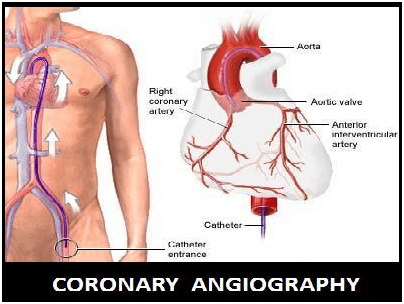
What is Coronary Angiography?

Coronary angiography is a test used to determine how much narrowing there is in your arteries. It is a method that uses contrast dye, usually containing iodine and x-ray pictures to recognize blockages in the coronary arteries that are created by plaque buildup. It supplies your heart muscle with blood. They can become clogged from a buildup of cholesterol, cells or other substances (plaque).

Why do I need Coronary Angiography?

Coronary angiography can be used to help diagnose heart conditions, help plan future treatments and carry out certain procedures. For example, it may be used:

  • after a heart attack – where the heart’s blood supply is blocked
  •  to help diagnose angina – where pain in the chest is caused by restricted blood supply to the heart
  • to plan interventional or surgical procedures – such as a coronary angioplasty, where narrowed or blocked blood vessels are widened
Categories
Uncategorized

My First Blog Post

Be yourself; Everyone else is already taken.

— Oscar Wilde.

This is the first post on my new blog. I’m just getting this new blog going, so stay tuned for more. Subscribe below to get notified when I post new updates.

Categories
Uncategorized

Introduce Yourself (Example Post)

This is an example post, originally published as part of Blogging University. Enroll in one of our ten programs, and start your blog right.

You’re going to publish a post today. Don’t worry about how your blog looks. Don’t worry if you haven’t given it a name yet, or you’re feeling overwhelmed. Just click the “New Post” button, and tell us why you’re here.

Why do this?

  • Because it gives new readers context. What are you about? Why should they read your blog?
  • Because it will help you focus you own ideas about your blog and what you’d like to do with it.

The post can be short or long, a personal intro to your life or a bloggy mission statement, a manifesto for the future or a simple outline of your the types of things you hope to publish.

To help you get started, here are a few questions:

  • Why are you blogging publicly, rather than keeping a personal journal?
  • What topics do you think you’ll write about?
  • Who would you love to connect with via your blog?
  • If you blog successfully throughout the next year, what would you hope to have accomplished?

You’re not locked into any of this; one of the wonderful things about blogs is how they constantly evolve as we learn, grow, and interact with one another — but it’s good to know where and why you started, and articulating your goals may just give you a few other post ideas.

Can’t think how to get started? Just write the first thing that pops into your head. Anne Lamott, author of a book on writing we love, says that you need to give yourself permission to write a “crappy first draft”. Anne makes a great point — just start writing, and worry about editing it later.

When you’re ready to publish, give your post three to five tags that describe your blog’s focus — writing, photography, fiction, parenting, food, cars, movies, sports, whatever. These tags will help others who care about your topics find you in the Reader. Make sure one of the tags is “zerotohero,” so other new bloggers can find you, too.

Design a site like this with WordPress.com
Get started